What To Do When the Power Goes Out: A No-Panic Guide to Emergency Preparedness
The lights go out. The fridge stops humming. The silence sets in—and not the peaceful kind.
Whether it’s the icy punch of a winter storm, a hurricane’s brute force, or a surprise blackout on a summer night, losing power can go from mild inconvenience to full-blown emergency fast. If it lasts more than a few hours, you’re not just missing Netflix—you’re managing food spoilage, frozen pipes, and safety risks.
Here’s what you need to know to stay safe, stay calm, and make smart moves when the power goes out—plus a printable one-page checklist to guide your first 10 minutes.
Step 1: Safety First
Before you think about flashlights or phone chargers, stop and take stock of your surroundings.
Sniff, Scan, Listen
- Smell gas? Leave immediately. Don’t flip switches, don’t use phones inside. Go outside, call 911 or your gas company.
- See downed power lines? Stay at least 30 feet away. That’s the length of a school bus. Report it to the utility company.
- Hear carbon monoxide (CO) alarms? If you hear beeping (often 4 beeps, a pause, repeat), that’s a carbon monoxide warning. Leave the house and call 911.
Pro tip: Don’t use gas stoves or grills to heat your home. CO is invisible, odorless, and deadly.
Step 2: Get Oriented
Once you know you’re safe, it’s time to figure out what’s happening.
- Is it just your house? Check with a neighbor or look at the grid map on your utility’s website (if you’ve still got cell data).
- Unplug major appliances. This prevents a power surge when the electricity returns.
- Turn on one light. When it flicks back on, you’ll know power’s restored.
Step 3: Activate the Plan
This is where prep pays off.
Family Roles
- Adult 1: Checks the perimeter for hazards (ice damage, water leaks, tree limbs).
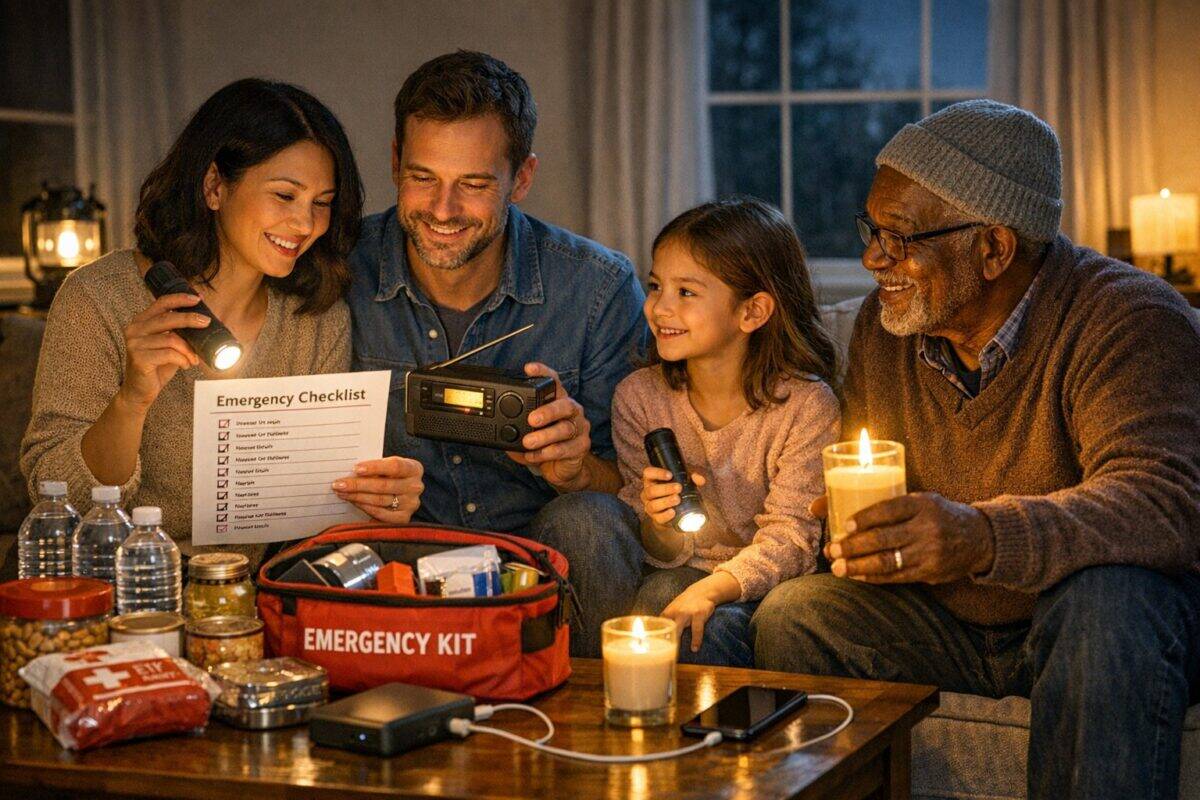
- Adult 2: Preps the emergency kit (flashlights, batteries, water, snacks, phone chargers).
- Older kids: Gather pets, grab blankets, help younger siblings.
- Younger kids: Stay calm. Be helpers, not hazards.
If you live alone, take it one task at a time—but have a system so you’re not rechecking the same things twice.
Things That Matter Most After an Outage
- Heat or Cool
- In winter, close blinds and curtains to keep warmth in. Layer clothes and use sleeping bags indoors.
- In summer, open windows early for cool air, then shut them midday to trap it.
- Food Safety
- Keep fridge and freezer closed. A full freezer stays cold ~48 hours; fridge about 4.
- Use a thermometer inside—above 40°F? Toss perishable food.
- Water
- City water may still work, but well pumps won’t. Fill tubs with water early on for flushing toilets.
- Have bottled water on hand—1 gallon per person per day.
- Communication
- Charge phones when the power flickers back. Conserve battery by turning on low-power mode.
- Text, don’t call—networks get overloaded.
Be Ready Before It Happens
A power outage isn’t the time to start preparing. If you live somewhere prone to ice, hurricanes, or wind storms, stock these ahead of time:
- Flashlights and headlamps (our emergency candles)
- Battery-powered radio
- Extra batteries
- Solar or crank-powered phone chargers
- Blankets, sleeping bags, warm layers
- Water and non-perishable food for 3–5 days
- First aid kit
- Copies of important documents
- A list of emergency contacts
First 10 Minutes Emergency Checklist (Print + Post on Fridge)
IF POWER GOES OUT: DO THIS FIRST
✔ 1. Safety Sweep (2 minutes)
☐ Smell for gas
☐ Listen for CO alarm
☐ Look for downed power lines
☐ Check for fire or water damage
✔ 2. Basic Communications (1 minute)
☐ Text family group chat: “Power’s out”
☐ Check with neighbor (phone or in-person)
✔ 3. Electrical Safety (1 minute)
☐ Unplug major appliances
☐ Leave one light on
✔ 4. Emergency Kit + Lighting (2 minutes)
☐ Grab flashlights (avoid candles)
☐ Get the emergency box
☐ Find batteries, phone chargers
✔ 5. Water + Fridge Plan (2 minutes)
☐ Fill bathtub if on a well
☐ Keep fridge and freezer CLOSED
☐ Check freezer thermometer if available
✔ 6. Assign Roles (2 minutes)
☐ Adult 1: Hazard sweep
☐ Adult 2: Supply setup
☐ Kids: Comfort + pet duty
Download The Checklist as a One Page PDF
Bottom line:
You can’t stop the power from going out—but you can stop it from turning into a disaster. With a plan, a few tools, and clear heads, your family can weather anything, even in the dark.