10 Ways To Prepare For An Ice Storm Like a Seasoned Off-Gridder
Stocking Up on Survival Essentials
When ice storms hit, grocery stores close and supply chains freeze up just like everything else. We need to have enough food, water, and emergency supplies already in our homes to last at least three days without power or access to stores.
Choosing the Right Non-Perishable Food
We’ve learned the hard way that not all non-perishable food items are created equal during winter storm prep. The key is picking foods that don’t require cooking or refrigeration.
Our go-to list includes canned soups, beans, vegetables, and fruits. We always stock peanut butter, crackers, granola bars, and dried fruit. These give us quick energy without any preparation.
Don’t forget about comfort food. When we’re stuck inside during a storm, having some chocolate, cookies, or your favorite snacks makes a real difference for morale. We also keep powdered milk, instant coffee, and tea bags on hand.
Remember to pack a manual can opener. We made that mistake once and had to open cans with a knife, which was dangerous and frustrating. If you have pets, stock up on extra pet food too since they depend on us completely during emergencies.
Keeping Water Supplies Flowing
Most storm preparedness guides recommend storing one gallon of water per person per day for three days minimum. That’s three gallons per person in your household.
We use a mix of storage methods. Large water jugs work well, but we also fill clean bathtubs before storms hit. This gives us extra water for flushing toilets and washing.
Power outages can affect water treatment plants and well pumps. Even if your tap water stays on, the pressure might drop or the quality could change. We always keep bottled water stored in a cool, dark place away from chemicals or gasoline.
Pro tip: Rotate your water supply every six months to keep it fresh. Mark the storage date on each container with a permanent marker so you remember when to swap them out.
Building an Unbeatable Emergency Kit
A solid emergency kit pulls together everything we need when the power goes out. Here’s what we keep in ours:
Essential Items:
- Flashlights and LED lanterns
- Extra batteries (check them twice a year)
- Battery-powered or hand-crank radio
- Portable phone chargers fully charged
- First aid kit with bandages and pain relievers
- Prescription medications for at least one week
- Warm blankets and extra layers of clothing
We store our kit in a waterproof container that’s easy to grab. Every family member knows where it is. We also keep a printed list of emergency contacts because smartphones die when we can’t charge them.
The hand-crank radio has saved us more than once. When cell towers went down during our last ice storm, that radio was our only connection to weather updates and emergency information.
Lighting the Way When the Power Fails
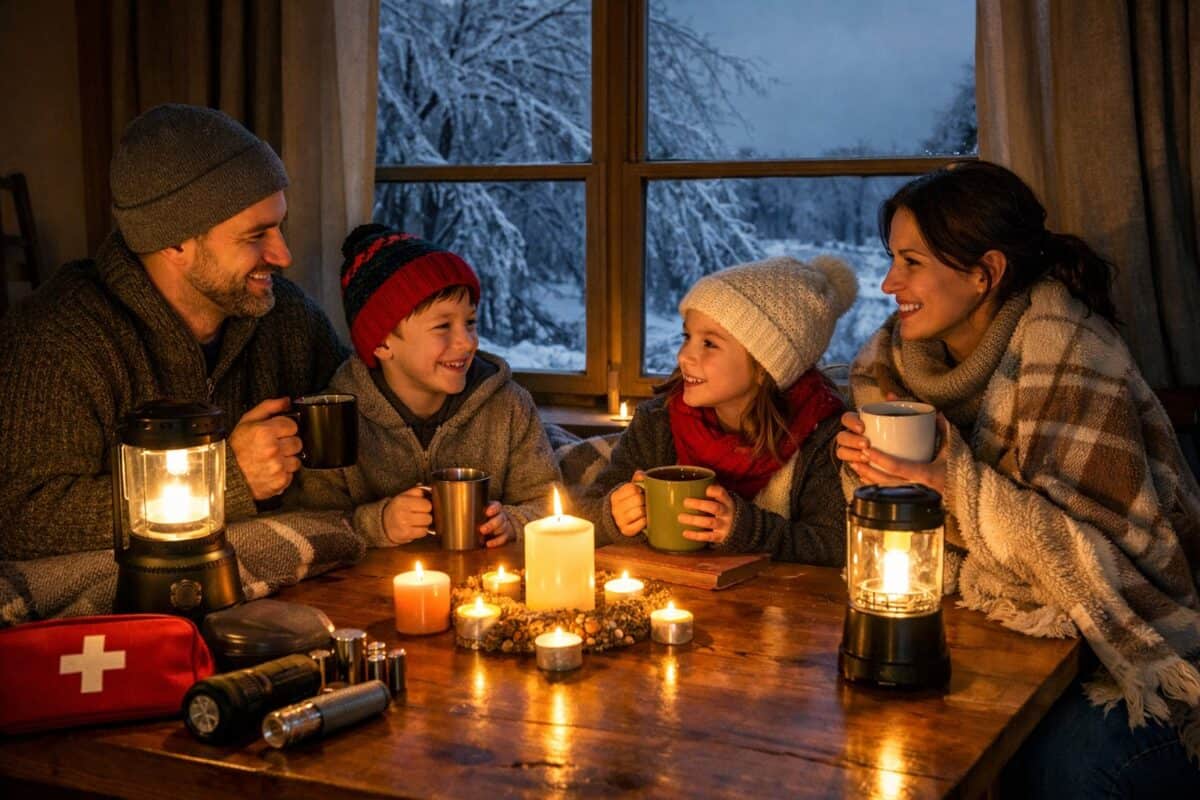
When an ice storm knocks out power, having the right lighting ready can mean the difference between calm preparation and stumbling around in the dark. We’ve learned through experience that dependable flashlights, backup power sources, and emergency radios form the core of any solid lighting strategy.
Why Flashlights Beat Candles Every Time
We’ll be honest—there’s something romantic about candles during a power outage. But after watching a neighbor’s house fire start from a knocked-over candle during a winter storm, we switched our thinking completely.
Flashlights are safer, more reliable, and more practical. They don’t pose fire risks, won’t go out in drafts, and you can carry them hands-free with headlamp models. We keep multiple types throughout our home: LED headlamps for cooking and repairs, handheld flashlights in every bedroom, and larger lanterns for ambient room lighting.
The key is having different types of lighting for different situations. We recommend at least one light source per person, plus extras. LED models are your best bet because they run cooler, last longer, and drain batteries slower than old incandescent bulbs.
Store your flashlights somewhere you can find them in complete darkness. We mark ours with glow-in-the-dark tape and keep them in the same drawer every single time.
Extra Batteries and Power Banks
Here’s what we learned the hard way: flashlights are worthless without power. During our first major outage, we had plenty of flashlights but ran out of batteries by day two.
Now we stock batteries in bulk—specifically the sizes our devices actually use. We check expiration dates twice a year and rotate stock. Alkaline batteries work fine for most situations, but lithium batteries last longer in extreme cold temperatures.
Power banks changed everything for us. These rechargeable battery packs keep phones, tablets, and USB-rechargeable lights running for days. We keep several charged at all times:
- 10,000mAh power bank for phones (charges most phones 2-3 times)
- 20,000mAh model for tablets and multiple devices
- Solar-rechargeable power bank as backup
The solar option takes forever to charge in cloudy winter weather, but it’s better than nothing when you’re on day five of no power.
Portable Radios for Weather Alerts
We almost left this off our list until we sat through a three-day outage with zero information about when power might return. That isolation felt worse than the cold.
A hand-crank emergency radio became one of our most-used tools. These devices receive AM/FM and NOAA weather alerts, and most include flashlights and phone charging ports. The hand-crank feature means you’re never without power—just a few minutes of cranking gives you 20-30 minutes of radio time.
We tune into local stations for restoration effort updates and weather forecasts. Knowing whether the outage will last hours or days completely changes how we manage resources. Some models include solar panels too, which we appreciate during longer outages when cranking gets old fast.
Keep fresh batteries as backup even in hand-crank models. Your arm gets tired quicker than you’d think.
Staying Warm When the Heat Goes Out

When the power fails during an ice storm, keeping your body temperature up becomes your number one priority. Layer up with the right materials and understand how to safely operate backup heating sources.
Blankets and Warm Clothing for Layered Protection
I’ll be honest with you—the first time we lost heat for three days during a winter storm, we learned fast that heating your body is more efficient than heating a room. We piled on every layer we could find, and it made all the difference.
Start with a base layer of thermal underwear or moisture-wicking material against your skin. Add a middle insulating layer like fleece or wool. Top it off with something windproof if you need to go outside. Natural down-filled clothing works incredibly well because it traps air and creates warmth without much weight.
Don’t forget your extremities. Thick socks, insulated boots, gloves, and a warm hat are essential. We keep chemical hand warmers on hand—you can tuck them in pockets or at your waist for extra heat close to your core.
For sleeping, pile on multiple blankets rather than relying on one thick comforter. Wool blankets are your friend—they insulate even when damp. Create a designated warm room where everyone stays together, and use extra blankets to cover windows and block drafts around doors.
Safe Use of Fireplaces and Alternative Heaters
We’ve used everything from wood stoves to kerosene heaters during outages, and safety isn’t optional—it’s survival. If you have a fireplace, make sure your chimney is clean before winter hits. A clogged chimney can fill your home with smoke or worse, catch fire.
For alternative heating methods like kerosene or catalytic gas heaters, only use indoor-rated models. Position them near a slightly cracked window for ventilation. Never run fuel-powered heaters without working carbon monoxide detectors—this is non-negotiable.
Wood stoves can be set up temporarily by a window with proper venting, but this takes time and planning. Keep doors closed to contain heat in your designated warm space, but don’t block small drafts if you’re running fuel heaters—those air leaks help with efficient burning and prevent dangerous fume buildup.
Never leave any heating source unattended, and keep flammable materials at least three feet away from heaters.
Back-Up Power and Generator Safety
A generator can be a lifesaver when ice coats the power lines, but only if we know how to use it without accidentally poisoning ourselves or burning down the garage. We need to prep our equipment before the storm hits, store fuel properly, and respect carbon monoxide like the silent killer it is.
Prepping Your Generator for Winter Duty
We’ve learned the hard way that the middle of an ice storm is the worst time to discover our generator won’t start. Before winter weather arrives, we need to run through a complete checklist.
Check the oil level first. Cold weather makes oil thicker, so we might need a winter-grade oil depending on our model. Look at the air filter—a clogged filter means a struggling engine when we need it most.
Inspect every belt, hose, and connection for cracks or wear. Test the battery if we have an electric start model. Run the generator for 20-30 minutes under at least half load to make sure everything works smoothly.
We should also review the owner’s manual to understand our specific model’s requirements. If we lost the manual, most manufacturers post PDFs online. This isn’t exciting work, but it beats shivering in the dark because we skipped maintenance.
Fuel Storage and Handling Tips
Fresh fuel matters more than most people realize. We use gasoline that’s less than 30 days old whenever possible, and we never use fuel with more than 10% ethanol—it damages small engines fast.
Store fuel in approved containers away from any heat sources or sparks. Add fuel stabilizer before storing the generator for the season. This keeps the gas from breaking down and gumming up the carburetor.
Here’s something critical: only refuel when the engine is completely cool. Hot engines can ignite fuel vapors in seconds. We learned to wait at least 15 minutes after shutdown before touching the fuel cap.
Use a funnel to avoid spills on hot surfaces. If we do spill, wipe it up immediately and let excess fuel evaporate before restarting. Those fuel-soaked rags? They go outside in a metal container, not in the regular trash.
Avoiding Carbon Monoxide Hazards
Carbon monoxide doesn’t smell, doesn’t give warnings, and kills faster than we’d think. We treat generator exhaust with extreme respect because one mistake can be fatal.
Never run a generator indoors—not in the garage with the door open, not in the basement, not on a covered porch. We place portable generators at least 20 feet from our home with the exhaust pointed away from windows, doors, and air vents.
Install a battery-powered carbon monoxide detector near bedrooms and on every level of the home. Test it monthly and replace batteries annually. If that alarm goes off, we get everyone outside immediately and call emergency services.
We never operate a generator in rain or snow without proper shelter—not because of carbon monoxide, but because water and electricity create shock risks. Use a canopy or generator cover that keeps it dry while maintaining airflow around the exhaust.
Protecting Pipes and Property
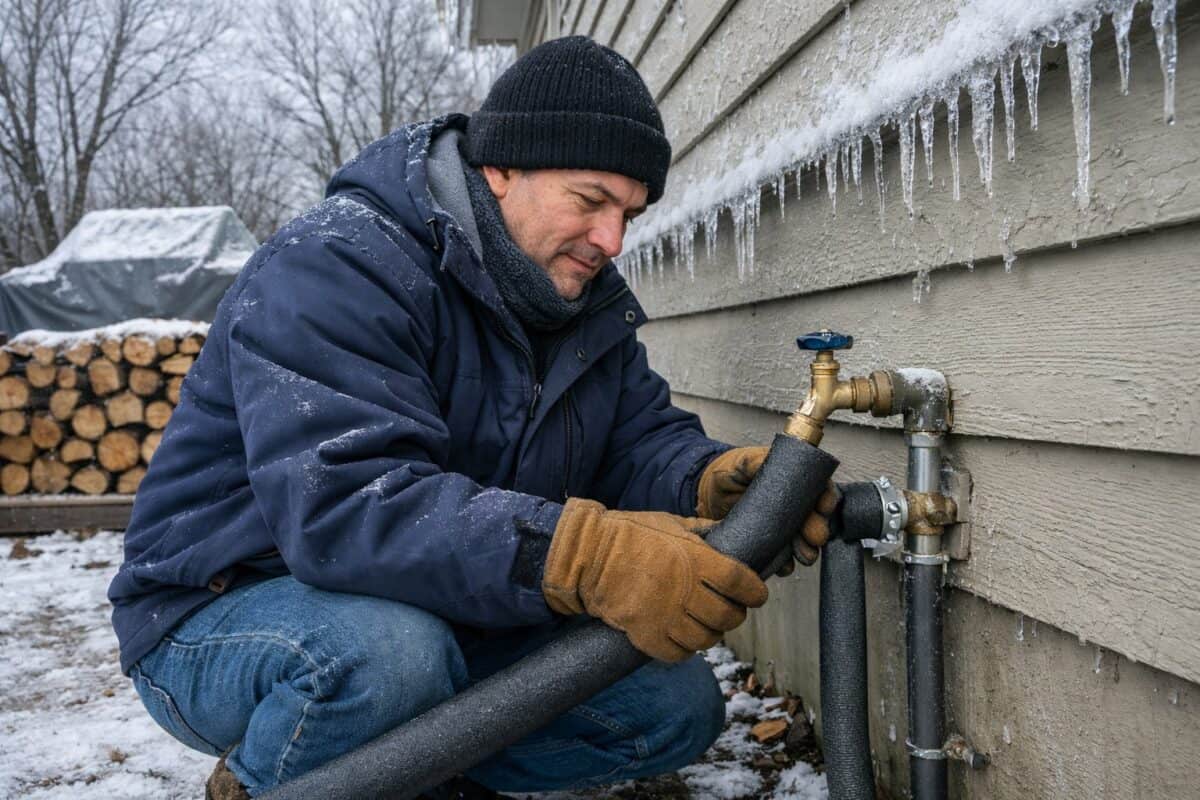
Ice storms don’t just knock out power—they can crack your pipes wide open and drop tree limbs through your roof. We’ve learned the hard way that a little prep work before the freeze saves you from waking up to a flooded homestead or a crushed shed.
How to Insulate Exposed Pipes Against the Deep Freeze
We’ll be straight with you—frozen pipes are one of the biggest threats to your property during an ice storm. When water freezes, it expands with serious force. That pressure can split metal or plastic pipes wide open, and even a tiny crack can spray hundreds of gallons of water through your home.
The pipes most at risk are the ones in unheated spaces: crawl spaces, attics, exterior walls, and outdoor spigots. We always start by insulating exposed pipes with foam pipe sleeves or wrap them in heat tape. You can grab these at any hardware store for cheap.
Here’s what we do before a storm:
- Wrap all exposed pipes in unheated areas with foam insulation
- Seal gaps and cracks in walls near pipes with caulk or spray foam
- Let faucets drip slightly during the freeze—moving water doesn’t freeze as easily
- Open cabinet doors under sinks to let warm air reach the pipes
- Disconnect and drain outdoor hoses and shut off exterior faucet valves
If you lose power during the storm, your home loses heat fast. We’ve had success leaving a faucet dripping even when the power’s out—it keeps water moving through the system and reduces pressure buildup.
Preventing Tree and Roof Damage
Ice storms coat everything in heavy, thick ice. We’ve seen branches that looked sturdy snap like twigs under the weight. When those limbs fall, they take out power lines, punch holes in roofs, and crush anything underneath.
Walk your property before the storm hits. Look for dead branches, weak limbs, or trees leaning toward your house. We trim back anything within striking distance of our roof, power lines, or outbuildings. It’s worth hiring someone with a chainsaw and experience if you’re not comfortable doing it yourself.
Check your roof and gutters too. Clear out leaves and debris so melting ice can drain properly. Ice dams form when water backs up under shingles and leaks into your attic. We also make sure our gutters are secured tight—heavy ice can rip them right off the house.
If a storm’s coming and you haven’t trimmed yet, at least move vehicles, firewood, and anything valuable away from trees. We learned that lesson after a limb totaled our truck.
First Aid, Medications, and Staying Healthy
When ice storms knock out power and make roads impassable, we’re often cut off from pharmacies and hospitals for days. Having the right medical supplies on hand and ensuring we can access our prescriptions isn’t just smart—it’s essential for keeping everyone safe until help becomes available again.
Building a Practical First Aid Kit
We learned this lesson the hard way during our first winter off-grid. When my partner sliced their hand during a generator repair in the middle of an ice storm, we realized our tiny travel first aid kit wasn’t going to cut it.
A proper first aid kit for winter emergencies needs more than just band-aids. We keep ours stocked with gauze pads, medical tape, antiseptic wipes, antibiotic ointment, and various sizes of bandages. Add pain relievers, anti-diarrhea medication, and antacids too.
Don’t forget cold-weather specific items. We include instant cold packs for injuries and a thermometer to monitor for hypothermia. Throw in tweezers, scissors, and a first aid manual—because when the internet’s down, that book becomes invaluable.
Store everything in a waterproof container that’s easy to grab. Label it clearly and make sure everyone in your household knows where it lives.
Keeping Critical Prescriptions Accessible
About half of all Americans take prescription medications daily, and ice storms can make refills impossible. We’ve seen neighbors panic when they realized they only had two days of heart medication left and no way to reach a pharmacy.
Talk to your doctor about getting a 90-day supply instead of 30. Keep a written list of all medications, dosages, and pharmacy numbers in your emergency kit—don’t rely on your phone’s battery lasting.
If your medications need refrigeration, store them with a cooler and ice packs nearby. We also keep over-the-counter essentials like pain relievers, cough medicine, and any vitamins we take regularly.
Consider keeping a card with your medication list in your wallet too. It’s saved us during unexpected situations more than once.
Making a Family (and Pets) Emergency Plan
A winter storm doesn’t care if your family’s scattered across town or if your dog refuses to wear booties. We need a plan that keeps everyone together and safe, from our kids to our four-legged companions.
Creating Communication and Evacuation Strategies
We’ve learned the hard way that cell towers go down fast when ice builds up. That’s why we need to establish a family meeting place that’s easy to find even in a whiteout.
Pick two spots: one right outside your home for quick evacuations and another outside your neighborhood in case you can’t get back. Write down everyone’s phone numbers on actual paper. Keep copies in your car, wallet, and emergency kit.
Your family communication plan should include:
- Out-of-state contact person (local lines often fail first)
- School and workplace emergency procedures
- Neighbor’s contact information
- Alternative routes out of your area
We also designate one person outside the disaster zone as our hub. When local calls won’t go through during a winter storm, texts and long-distance calls sometimes still work. This person becomes our central point of contact.
Practice your evacuation route before you need it. Drive it with your family so everyone knows the way even in bad conditions.
Caring for Pets Through the Storm
Our pets depend on us completely when disaster strikes. We can’t just grab the emergency kit and go—we need supplies for them too.
Put together a pet emergency kit with at least seven days of food and water in watertight containers. Add their medications, medical records, photos (for identification if you’re separated), and comfort items like their favorite toy or blanket.
Essential pet supplies:
- Carrier or crate for each animal
- Leash and collar with ID tags
- First aid kit designed for pets
- Litter box or pee pads
- Contact info for your vet and nearest emergency animal hospital
If you need to shelter in place during a winter storm, identify which room you’ll all stay in together. Keep your pet’s crate and supplies there ahead of time. Never leave pets outside or chained up during severe weather—they can freeze or panic.
Know which hotels, shelters, and friends’ homes accept animals before you evacuate. Not all emergency shelters allow pets, so research your options now.
Frequently Asked Questions
When ice storms hit, the questions pile up fast. Here’s what we’ve learned about keeping warm, staying stocked, running backup heat safely, protecting your vehicle and pipes, and maintaining contact when the grid goes dark.
How should I insulate my home to keep the warmth in during a fierce ice storm?
We’ve ridden out enough ice storms to know that heat loss happens faster than you’d think. The first place we focus on is windows. They’re the biggest energy vampires in any home.
Plastic window insulation kits work surprisingly well. You tape a plastic film over the window frame and use a hair dryer to shrink it tight. It’s not pretty, but it creates an extra layer of dead air space that cuts heat loss dramatically.
Heavy curtains or blankets hung over windows add another barrier. We’ve even tacked up old sleeping bags over windows in our cabin during brutal cold snaps.
Don’t forget about doors. We stuff old towels or foam pipe insulation along the bottom of exterior doors to block drafts. You’d be shocked how much cold air sneaks in through that gap.
Attic insulation matters more than most people realize. Heat rises, and if your attic isn’t properly insulated, you’re basically heating the sky. We aim for at least R-30 insulation value in cold climates.
Basement and crawl space insulation helps too. Cold floors make the whole house feel colder, and exposed pipes in those areas are the first to freeze.
What are the essential emergency supplies to stock up on before the ice hits?
We keep enough supplies on hand to ride out 72 hours without power or access to stores. That’s the bare minimum.
Water comes first. At least one gallon per person per day is the standard, but we usually stock extra. If the power’s out long enough, municipal water systems can fail too.
For food, we focus on stuff that doesn’t need cooking. Canned goods, peanut butter, crackers, granola bars, dried fruit, nuts. A manual can opener is essential because we’ve watched people stare at cans helplessly when they realize all their openers are electric.
We keep a battery-powered NOAA weather radio. When the power’s out and cell towers are down, that radio might be your only connection to emergency updates.
Flashlights and batteries are obvious, but we’ve learned to avoid candles. They’re fire hazards, especially when you’re tired and stressed. LED lanterns give better light anyway.
A well-stocked first aid kit and a month’s supply of any prescription medications are non-negotiable. We learned that one the hard way when a neighbor ran out of critical meds during a week-long outage.
Can you explain the safest ways to use generators or alternative heating sources when the power’s out?
Here’s the thing about generators: they can save your life or kill you, depending on how you use them. Carbon monoxide doesn’t mess around.
Never run a generator indoors. Not in your garage, not in your basement, not even with the door cracked. We position ours at least 20 feet away from the house with the exhaust pointed away from all windows and doors.
We test our generator before winter hits and keep extra fuel stored safely outside. Generators eat through gas faster than you’d expect.
For wood stoves and fireplaces, we make sure the chimney gets professionally cleaned before winter. Creosote buildup can cause chimney fires, and we’ve seen those turn ugly fast.
Space heaters can work if you use them right. We only use electric models with automatic shut-off features. Keep them at least three feet away from anything flammable, and never leave them running when you’re asleep or out of the room.
Carbon monoxide detectors are critical. We install battery-operated ones on every level of our home and test them monthly. They’re cheap insurance against a silent killer.
What steps do I need to take to make sure my vehicle is ready to brave an ice storm?
We start by keeping the gas tank at least half full throughout winter. Fuel lines can freeze when tanks run low, and you don’t want to get caught needing to evacuate with an empty tank.
Winter tires make a massive difference. We switched to them years ago and won’t go back. All-season tires just don’t cut it on ice.
An emergency kit lives in our vehicle from November through March. Blankets, extra warm clothes, a shovel, ice scraper, jumper cables, sand or cat litter for traction, water, non-perishable food, and a flashlight.
We check antifreeze levels before winter and make sure the battery is in good shape. Cold weather is brutal on batteries, and a dead battery during an ice storm can be dangerous.
A brightly colored cloth tied to the antenna helps rescuers spot you if you get stranded. We also keep a phone charger in the vehicle.
What’s the best strategy to prevent pipes from freezing and bursting in sub-zero temps?
Frozen pipes are one of the most expensive problems an ice storm can cause. We’ve seen entire basements flooded when pipes burst.
Insulating exposed pipes is the first line of defense. We wrap foam pipe insulation around any pipes in unheated areas like basements, crawl spaces, attics, and exterior walls.
When temperatures drop below freezing, we let faucets drip slightly. Moving water doesn’t freeze as easily as standing water. Even a trickle helps.
We open cabinet doors under sinks to let warm air circulate around the pipes. This simple trick has saved us more than once.
If we’re worried about a particular area, we aim a small space heater toward it. Not too close to avoid fire risk, but close enough to keep air moving and temperatures up.
Disconnecting and draining outdoor hoses prevents outdoor faucets from freezing. We shut off the water to outdoor spigots from inside and drain them completely.
How do I create a comprehensive communication plan to stay connected during severe ice storms?
Cell towers often go down during ice storms, so we don’t rely solely on phones. We establish a family meeting place before the storm hits and make sure everyone knows where to go if we get separated.
We designate an out-of-state contact person. When local networks are overloaded, long-distance calls sometimes get through better. Everyone in the family has this person’s number memorized.
We keep a list of emergency numbers written down. When your phone dies, you can’t look up the utility company’s outage line or your insurance agent’s contact info.
A battery-powere